Quick verdict: the cheapest live chat software is not always the cheapest support system. In 2026, small businesses should compare live chat pricing by looking at five separate cost drivers: paid agent seats, ticket or conversation limits, AI-agent usage, automation limits, and ecommerce/order-management features. A $19-per-agent help desk can become expensive if you need omnichannel messaging, while a flat ecommerce support plan can become the better deal if it replaces several Shopify support apps.
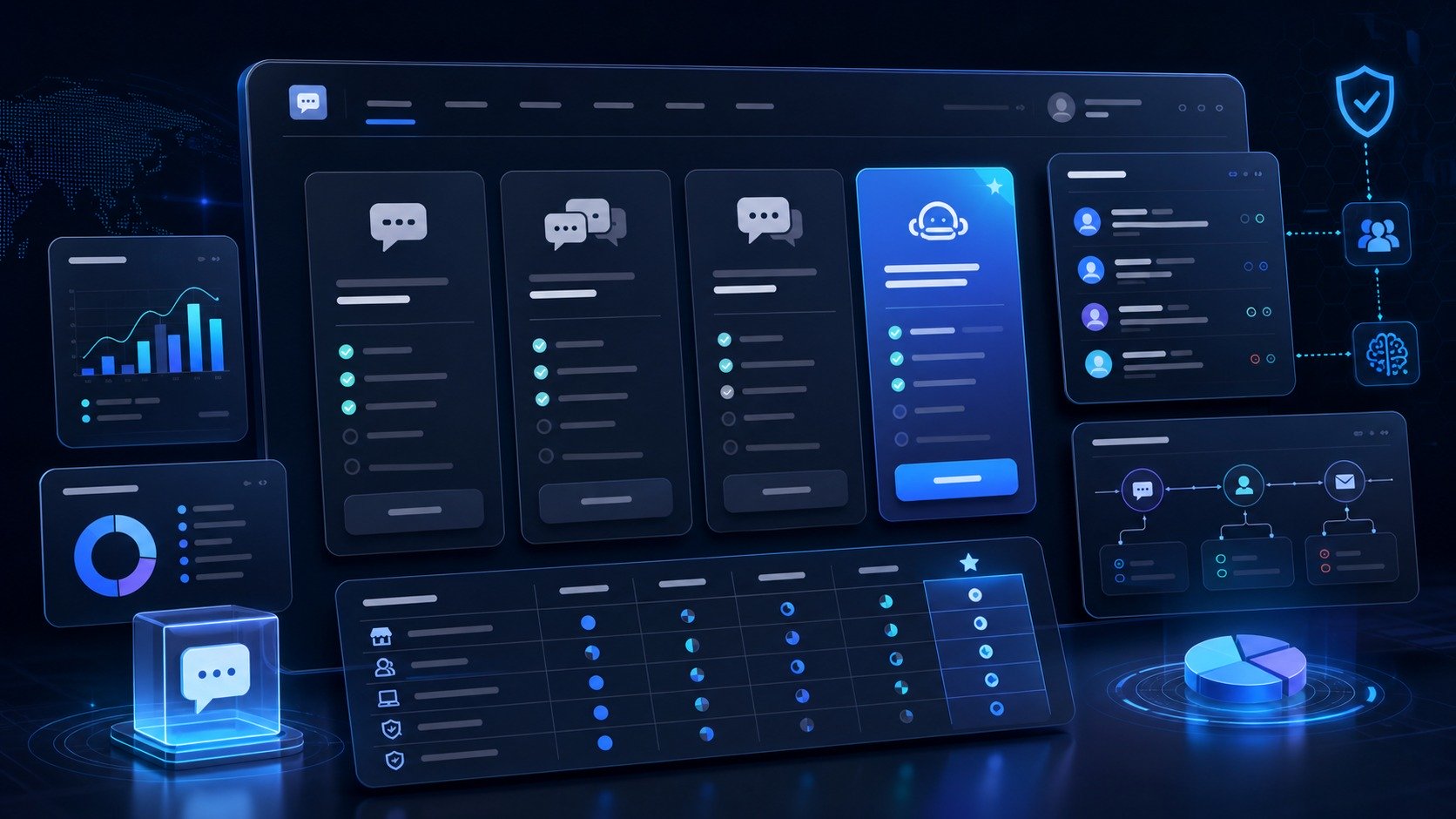
This live chat software pricing comparison is written for small businesses, ecommerce teams, SaaS founders, and lean support teams that want to avoid buying the wrong support stack. It compares Tidio, Intercom, Zendesk, Gorgias, and Freshdesk from a practical buyer perspective: what each pricing model rewards, where AI costs can surprise you, and which type of team should shortlist each option.
If you are still building your shortlist, start with CyberTrendLab’s broader guide to the best AI customer service tools for small businesses. If Tidio is already on your list, pair this comparison with our detailed Tidio review. This article focuses specifically on pricing architecture and total cost of ownership.
How to compare live chat software pricing in 2026
Vendor pricing pages often highlight the lowest entry point, but support software bills rarely come from one line item. Before choosing a plan, build a small internal model around these questions:
- How many humans need paid seats? A per-agent platform is predictable if your team is small, but grows linearly as you add support, sales, and operations users.
- How many customer conversations or tickets do you handle? Some tools price by ticket volume, billable conversations, or automation interactions rather than only by seats.
- Will AI resolve conversations or only assist agents? AI-agent usage can be included, metered, or sold as an add-on. The difference matters once volume grows.
- Do you need ecommerce context? Shopify order lookup, returns, revenue attribution, and macros can be worth paying for if they replace manual work.
- Do you need a full help desk? Live chat alone is different from ticketing, knowledge base, routing, reporting, phone, social, and SLA management.
- What happens when usage spikes? Look for overage fees, usage thresholds, and the point where you are forced into a higher tier.
At the time of writing, the public pricing pages for the tools below show a mix of annual discounts, monthly options, AI usage fees, and sales-led enterprise tiers. Always verify the current plan limits before buying, because SaaS vendors adjust packages frequently.
| Tool | Pricing model to watch | Best fit |
|---|---|---|
| Tidio | Plan tier + billable conversations + Lyro/automation limits | Small ecommerce and service teams that want live chat plus practical AI automation |
| Intercom | Per-seat support plans plus Fin AI outcome usage | SaaS and product-led teams that want a premium AI-first support platform |
| Zendesk | Per-agent support and suite tiers with omnichannel and AI features by tier | Teams that need structured ticketing, routing, reporting, and scalable service operations |
| Gorgias | Ecommerce ticket volume + automated interaction and add-on economics | Shopify-heavy ecommerce brands that want support tied to order workflows |
| Freshdesk | Per-agent help desk tiers with AI features concentrated higher up the stack | Budget-conscious teams that want classic ticketing before advanced AI automation |
Tidio pricing: best when live chat, AI, and ecommerce support need to stay simple
Tidio’s pricing page currently presents a free entry point, paid Starter and Growth-style tiers, and larger sales-led plans. The important detail is that Tidio is not just a chat widget. Its value comes from combining live chat, help desk workflows, automation, and Lyro AI Agent into one platform.
For many small businesses, Tidio is attractive because the first meaningful plan can cover the core support workflow without requiring an enterprise help desk rollout. The pricing model is especially relevant for ecommerce stores and small SaaS teams that want to answer repetitive questions, route conversations, and add AI without building a complicated support operation.
Where Tidio can be cost-effective
- Your team has a small number of human agents.
- You want AI to handle common questions, but you still need an easy human handoff.
- You care about website chat, email-style tickets, and simple automation more than enterprise routing.
- You are an ecommerce or service business that wants faster response times without hiring a larger support team.
Where Tidio can become less ideal
If you need deep enterprise governance, very advanced reporting, complex routing, or a large support organization with multiple teams and regions, Tidio may not be the long-term operational center. In that case, compare the upgrade path against Zendesk or Intercom before committing your support workflow.
Small-business pricing takeaway: Tidio is usually a strong shortlist option when you want useful AI support automation without adopting a heavyweight enterprise service platform.
Intercom pricing: premium AI-first support with seat and outcome economics
Intercom has repositioned heavily around Fin AI Agent and an AI-first customer service platform. Its public pricing page currently shows support plans such as Essential, Advanced, and Expert, with the Essential plan promoted from a per-seat monthly starting point and Fin priced from a per-outcome model. That structure means your real bill depends on both human seats and AI-resolved support volume.
This can be excellent for teams that want AI to solve real customer issues, not merely summarize conversations. But it also means a small business should estimate support volume carefully. If Fin resolves a meaningful number of questions, the ROI can be strong. If your knowledge base is thin or your tickets are mostly complex account-specific issues, usage economics may be harder to predict.
Where Intercom can be worth the premium
- You operate a SaaS or digital product where in-app messaging matters.
- You want a mature customer support, onboarding, and product messaging environment.
- You can maintain a high-quality help center that lets an AI agent answer accurately.
- You want automation, routing, reporting, and customer context in one polished interface.
Where Intercom can become expensive
Intercom is rarely the cheapest route for a team that only needs a website chat widget and shared inbox. Per-seat pricing plus AI outcome usage is powerful, but it rewards teams that will actually use the platform’s depth. Before buying, model a realistic month with your expected seats, support requests, and AI resolution rate.
Small-business pricing takeaway: Intercom is best when support is part of the product experience and AI resolution can create measurable savings or retention lift.
Zendesk pricing: structured support operations with predictable per-agent tiers
Zendesk remains one of the most recognizable customer service platforms. Its current pricing page lists entry support plans from a per-agent annual price and Suite tiers that add messaging, live chat, telephony, AI features, routing, and broader service functionality at higher price points.
The strongest reason to choose Zendesk is operational maturity. If your business already has multiple support queues, escalation paths, SLA expectations, and reporting needs, Zendesk’s plan structure can be easier to explain internally than a usage-heavy AI tool. You buy seats and tiers, then expand features as your process matures.
Where Zendesk makes pricing sense
- You need a real ticketing backbone, not just chat.
- You expect support complexity to increase over time.
- You want routing, reporting, help center, and omnichannel service in one system.
- You have managers who need consistent metrics across agents and channels.
Where Zendesk may be more than you need
If your team only handles a small number of website chats each day, Zendesk can feel heavier than necessary. It becomes more compelling when support operations are already a bottleneck or when you need structure before adding AI at scale.
Small-business pricing takeaway: Zendesk is the safer operational choice when your support process is growing from informal inbox management into a real service desk.
Gorgias pricing: ecommerce-first support economics
Gorgias is different from the other tools in this comparison because its pricing is built around ecommerce support. The current pricing page highlights a Starter entry point with included ticket and automated interaction allowances, plus higher-volume plans and enterprise options for larger brands. The cost model is closely tied to support volume and automation usage rather than only agent seats.
That pricing structure can be a good fit for Shopify brands because the software is designed around order context, revenue workflows, customer conversations, and ecommerce support automations. A generic help desk may be cheaper on paper, but it may not reduce the same amount of manual ecommerce work.
Where Gorgias can justify the cost
- Your support team spends time answering order status, return, shipping, and product questions.
- You want support conversations connected to ecommerce data.
- You sell enough volume that automation saves real labor hours.
- You care about support as a revenue channel, not just a cost center.
Where Gorgias may be the wrong shortlist
For SaaS, agencies, local service businesses, and non-ecommerce teams, Gorgias may be too specialized. If order workflows are not central to your support load, compare Tidio, Freshdesk, Zendesk, or Intercom first.
Small-business pricing takeaway: Gorgias is most compelling when ecommerce workflow savings matter more than the lowest published plan price.
Freshdesk pricing: budget-friendly help desk fundamentals
Freshdesk’s pricing page currently shows a per-agent model with Growth, Pro, and Enterprise-style tiers, with higher tiers adding more advanced reporting, routing, security, and AI-related capabilities. It is often a practical fit for teams that want help desk fundamentals before committing to a premium AI-first platform.
Freshdesk can be especially useful when your first priority is organizing support tickets, knowledge base content, customer portals, and agent workflows. It may not feel as product-led as Intercom or as ecommerce-specific as Gorgias, but it can cover a lot of support basics at a relatively approachable entry point.
Where Freshdesk makes sense
- You need a traditional help desk with clear per-agent costs.
- You want room to grow into more routing, reporting, and support operations features.
- You are more price-sensitive than brand-sensitive.
- You do not need the deepest in-app SaaS messaging or ecommerce workflows.
Small-business pricing takeaway: Freshdesk is a sensible baseline option when your team needs ticketing discipline first and AI automation second.
Which live chat pricing model is best for your team?
Choose Tidio if you want practical AI chat without enterprise complexity
Tidio is the most natural first shortlist for many small businesses that want live chat, AI answers, ticketing, and automation in a package that does not require a large support department. It is especially strong if your support workflow is still relatively simple but repetitive questions are consuming too much time.
Choose Intercom if support is part of your product experience
Intercom is strongest for SaaS and product-led companies that see customer support, onboarding, and engagement as part of the product. Its AI outcome pricing can make sense when Fin handles meaningful volume and when the product experience benefits from Intercom’s polished messenger and workflow tools.
Choose Zendesk if you need support operations discipline
Zendesk becomes attractive when you have a real service operation to manage: agents, queues, SLAs, escalations, reporting, and multiple channels. It may be more structure than a micro-business needs, but it is built for support teams that are outgrowing informal tools.
Choose Gorgias if ecommerce context is the main value
Gorgias is not just another help desk with chat. It is built for ecommerce support teams that need order context, automation, and revenue-aware workflows. If Shopify support volume is the problem, Gorgias deserves a serious look.
Choose Freshdesk if you want reliable help desk basics at a controlled cost
Freshdesk is a strong baseline for teams that need ticketing, portals, and support organization before they need advanced AI resolution. If your buying criteria are predictable per-agent pricing and broad help desk fundamentals, it should be on the shortlist.
Hidden costs to model before buying
Small businesses often compare only the headline monthly price. That misses the costs that appear after implementation:
- Knowledge base cleanup: AI agents need accurate, current support content. Weak documentation reduces automation ROI.
- Implementation time: Routing rules, macros, integrations, and templates take real setup effort.
- Security review: Any support tool connected to customer data needs access controls, MFA, audit logs where available, and offboarding discipline.
- AI mistakes: Human review workflows matter when AI can answer refund, billing, or account-access questions.
- Overages: Conversation, ticket, and AI usage limits can change the economics as volume grows.
- Integrations: CRM, ecommerce, analytics, and help center integrations may require higher plans or additional tools.
For a security-first buying process, read CyberTrendLab’s AI agent security checklist and the broader AI workflow automation security guide. Customer support AI is useful, but it still needs least-privilege access, logging, approval boundaries, and clean data handling.
A simple live chat pricing worksheet
Before starting trials, estimate the next 90 days using this worksheet:
- Agent seats: list every person who needs to reply, manage, audit, or report on conversations.
- Monthly conversations: count chat, email, social, ticket, and ecommerce support requests separately.
- Repetitive question rate: estimate what percentage of questions an AI agent could answer from approved content.
- Escalation rate: estimate how many AI conversations still require a human handoff.
- Channel requirements: decide whether you need website chat only, or also email, social, phone, WhatsApp, and in-app messaging.
- Security requirements: list SSO, roles, audit logs, data retention, and admin controls you need now versus later.
- Upgrade trigger: define the usage or team-size point where your current plan would stop being economical.
This exercise prevents the most common buying mistake: choosing the tool with the lowest entry price, then discovering that the features you actually need live two tiers higher.
Final recommendation
For most small businesses, the best live chat software pricing decision looks like this:
- Start with Tidio if you want AI-assisted live chat and simple support automation without enterprise complexity.
- Shortlist Intercom if you run a SaaS or digital product and AI-powered support is part of customer experience strategy.
- Shortlist Zendesk if support operations, reporting, routing, and process maturity matter more than the lowest entry price.
- Shortlist Gorgias if ecommerce order context is central to your support workload.
- Shortlist Freshdesk if you want predictable help desk fundamentals before paying for advanced AI-first workflows.
The right answer is not the cheapest published plan. It is the tool whose pricing model matches how your team actually handles support. For a lean business, that means modeling human seats, AI usage, conversation volume, and support workflow savings together before you commit.
FAQ
What is the cheapest live chat software for small business?
The cheapest option depends on whether you need only chat or a full support workflow. Free or low-cost entry plans can work for very small teams, but they may exclude AI automation, advanced routing, reporting, or higher conversation limits. Compare the first paid plan that actually includes the features you will use.
Is AI live chat cheaper than hiring more support agents?
It can be, but only when the AI agent can answer repeatable questions from accurate documentation. If your support issues are complex, account-specific, or poorly documented, AI may assist agents rather than replace workload. Model AI usage fees against expected resolution volume before assuming savings.
Should ecommerce stores choose Gorgias over Zendesk or Tidio?
Ecommerce stores should consider Gorgias when order context, Shopify workflows, returns, shipping questions, and support-driven revenue are central to the business. If the store only needs basic website chat and a shared inbox, Tidio or Freshdesk may be simpler. If the team needs enterprise service operations, Zendesk may be stronger.
Is Intercom worth it for a small SaaS company?
Intercom can be worth it when in-app support, onboarding, customer messaging, and AI resolution all matter to retention. It is usually less compelling if you only need a simple chat widget. Small SaaS teams should estimate seat count, Fin usage, and expected AI resolution rate before buying.
How often should support software pricing be rechecked?
Recheck pricing before renewal, after support volume changes, and whenever you add AI automation. Live chat and help desk vendors update packaging frequently, especially around AI features and usage limits.